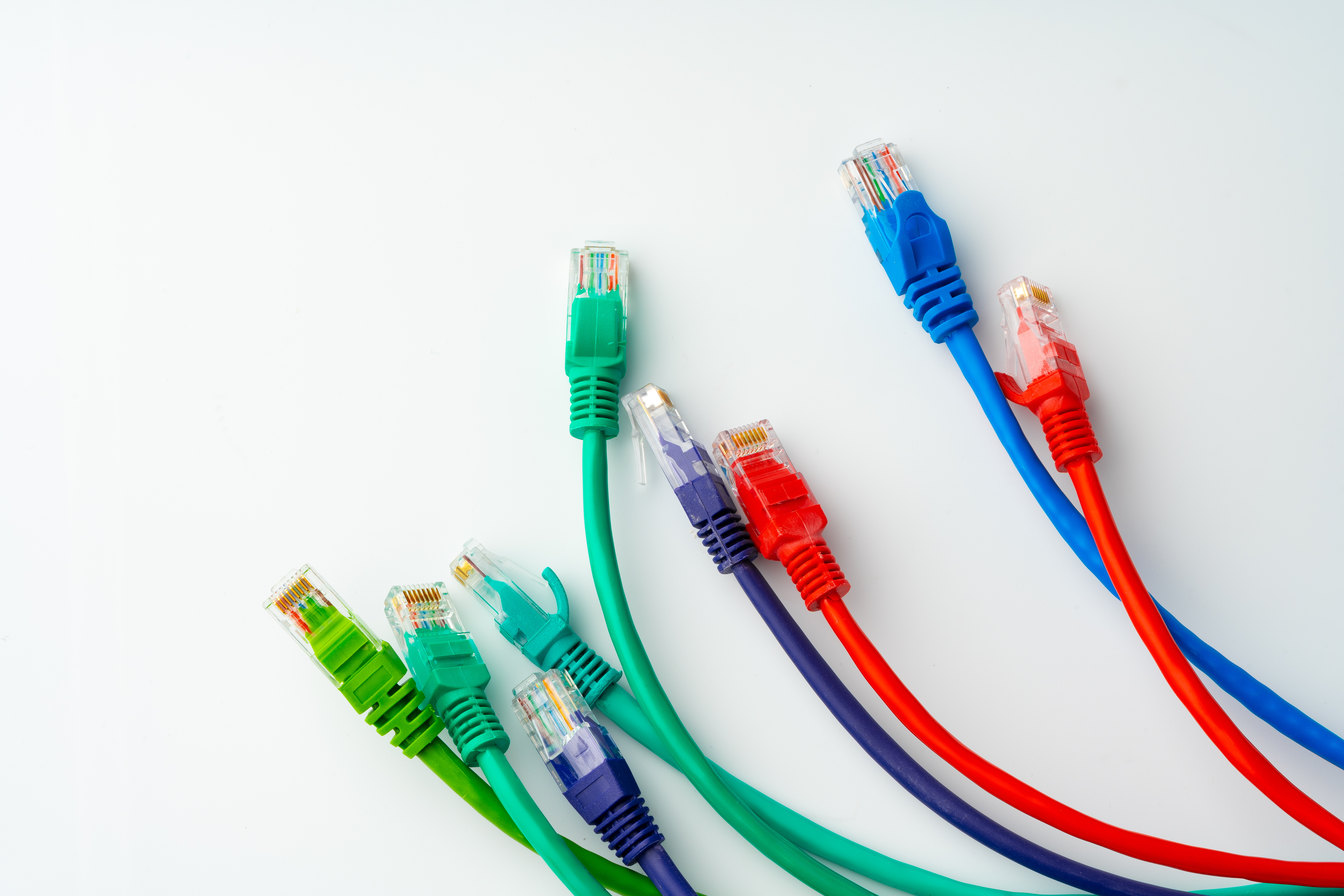
Two packing conventions, one length — plus the short measure problem nobody checks for.
Quick answer: A 305 metre box and a 1000 foot roll contain the same length of cable — 305 metres is the metric conversion of 1000 feet. The convention dates from American cabling standards. What varies between suppliers is not the nominal length but whether the box actually contains it, and whether the cable is wound as a pull box or on a spool.
The 305 metre figure looks arbitrary until you convert it. One thousand feet is 304.8 metres, rounded to 305. Structured cabling standards were formalised in the United States, the 1000 foot reel became the industry unit, and when the convention travelled to metric markets the number came with it rather than being replaced by a round 300.
So a box marked 305 m and a roll marked 1000 ft hold the same cable. If a supplier quotes 300 metres, that is a genuinely shorter box and should be priced accordingly.
The more consequential difference is how the cable is wound.
A pull box is a cardboard carton with the cable coiled inside and a feed hole in the top or side. The installer pulls cable out and the coil pays off from the inside without the box needing to move. It is quick, needs no equipment, and one person can carry it up a ladder.
A spool or reel holds the cable wound on a drum that must be mounted on a stand or axle so it can rotate freely. Setting it up takes longer, but the cable pays off under more even tension and there is no risk of the internal coil collapsing.
For most commercial installations, pull boxes win on speed. The caveat is winding quality. A badly wound pull box tangles partway through — the coil collapses inward and the cable knots at the feed hole. When that happens mid-pull, the installer has to cut the cable, abandon the remaining length in the box, or open the carton and rewind it by hand. On a project running to twenty boxes, one or two bad boxes erase whatever was saved on unit price.
A box labelled 305 metres does not always contain 305 metres. Short measure is one of the more persistent quality issues in the lower end of the Indian cable market, and it is close to invisible at the point of purchase.
It surfaces at the worst moment: the installer is on the last drop of the day, the cable runs out short of the outlet, and the run has to be abandoned and restarted from a fresh box. The wasted length, the wasted labour and the delay all land on the contractor rather than the supplier.
How to check. Most Cat6 cable carries sequential length markings printed along the jacket at one metre intervals. Read the number at the outer end of the box and at the inner end after the box is emptied. The difference is the actual length supplied. On a large order, spot check two or three boxes from the delivery rather than all of them.
The weight cross-check. Box weight is a useful secondary signal, though it confounds two variables — a light box might be short measure or it might be copper-clad aluminium rather than bare copper. Either answer is worth knowing.
Work from the floor plan rather than a rule of thumb where you can, but a rule of thumb is useful for early budgeting.
Step one — average run length. For a conventional commercial floor plate with a centrally positioned rack, 40 to 50 metres per outlet is a reasonable average. Measure the route to the nearest outlet and to the furthest, and take the midpoint if you want a quick sanity check on that figure.
Step two — total length. Multiply average run length by outlet count. A 100 point office at 45 metres average comes to 4,500 metres.
Step three — add wastage. Ten percent covers service loops at both ends, re-terminations, the tail left in each emptied box, and ordinary error. Some contractors work to fifteen percent on complex layouts. Our worked example takes 4,500 to roughly 4,950 metres.
Step four — convert to boxes. Divide by 305 and round up. 4,950 divided by 305 is 16.2, so 17 boxes.
Step five — round to the order break. Bulk pricing tiers may make 20 boxes cheaper per metre than 17. Spare cable on a cabling project is rarely wasted for long.
Beyond pricing, there is a technical argument for single-order procurement. Cable from one production run has consistent characteristics — same copper batch, same extrusion settings, same twist rates. Cable assembled from three orders placed months apart does not.
In practice this shows up during certification, where a handful of runs fail marginally for no traceable reason and the only difference is which box they came from. Ordering the whole quantity together removes the variable.
On phased projects, cable often sits in a store for months. Keep boxes off the floor, out of direct sun, and away from standing water. Cardboard pull boxes absorb moisture readily, and a collapsed damp box is very difficult to pull cleanly.
Store boxes upright in the orientation marked on the carton. Stacking them on their sides lets the internal coil shift and settle, which is one of the more common causes of a tangle later.
305 metres is the metric equivalent of 1000 feet, which became the standard packing length in the United States where structured cabling standards originated. The convention carried into international markets, so a 305 metre box and a 1000 foot roll contain the same length of cable expressed in different units.
At a typical average of 40 to 50 metres per drop, a 305 metre box yields roughly 6 to 7 drops. Short runs near the rack will stretch this further, and long runs to distant corners will reduce it. Always plan for the average across the floor rather than the best case.
A pull box is a carton with the cable coiled inside and a feed hole, so cable pays out without the box rotating. It is faster and reduces tangling compared with a spool that must be mounted on a stand. Poorly wound pull boxes can tangle partway through, which stalls the pull and can kink the cable.
Our Cat6 UTP LAN cable ships in 100 metre and 305 metre boxes, with custom drum lengths available on bulk orders. Sequential length marking is printed along the jacket so you can verify what you received.
For project quantities and current rates — which move with copper commodity pricing — send us a bulk enquiry.
